My body is in physical pain. The discomfort picked up steam on January 20th and shows no signs of abating. Usually in situations like this I eventually realize that something is ‘stuck’ inside that needs to get out.
In this case, it’s a story I need to tell.
My late stepfather, Wayne Emerson Roberts, was a scientist in Alberta, Canada who studied fish, amphibians, snakes, and other critters. He obtained an MSc in Zoology at the University of Alberta in 1976. Wayne was a steady parental presence in my life for 27 years, dutifully attending school events and army cadet final parades. When I was heading to the community of Paulatuuq, Northwest Territories, Canada to work with fishers to document their brilliant application of Inuvialuit law and inter-nation and inter-species diplomacy to protect fish, water, and other entities in 2012, Wayne carefully refurbished one of his fishing rods for me and sent me along with it in tow. Although he and my mom did not marry, Wayne was a constant in my life for more than half of it. And I consider him, alongside my dad, as one of the mentors who taught me that science is worth pursuing, querying, and immersing myself in. Even if I did not adhere to the ‘model’ student paradigm expected in western academic scientific training of the early 21st century.
In fact I flunked out of biochemistry twice in my undergrad. And a biology prof back in 2005 told me I was ‘not graduate school material’.
Rather than dissuade me, those experiences of ‘failure’ in western science only redoubled my drive to understand why science, as presented by western practitioners in Canada, was and is struggling to keep up with the rich and dynamic worlds my family had taught me to move through and in.
So, Wayne was a scientific mentor to me. And, like my dad, like me, Wayne had deep roots in the Red River Métis Nation.
Wayne’s energy has been coming up more persistently in recent months as I try to finish a paper on quantum mechanics; Indigenous onto-sovereignties; science; prairie fish; and solidarities.
I started the article with a political anecdote. But as I set out to type the intro back in the summer of 2024, I had momentarily hesitated. I could open it with Wayne and his life as a Red River Métis scientist, or I could open it with a vignette from the Democratic National Convention. I chose the latter path. And hammered out 11,000 plus words in the coming months.
But after finishing the first draft in early January 2025, I began to have doubts. I could continue on my existing path — that is, the polemic. A style I’ve become pretty comfortable with since joining Twitter with my first account in 2009. Or I could begin to embody the lessons I am learning from moving towards (tentative, beginner) embrace of Zen (Mahayana) Buddhism via the teachings of Thich Nhat Hanh (spurred in equal measure by a Thich Nhat Hanh book appearing in the local little free library on my neighbour’s fence a day after my uncle passed away; and by ongoing conversations about Buddhist praxis with my friend Lydia and my colleagues Siddharth and Rowland). After a conversation with a dear friend two weeks ago, clarity was immediate. I knew in my gut that I needed to start the paper over and begin from the person who taught me to love science: my late Red River Métis mentor, Wayne.
Last year, I was invited out of the blue to apply for an arts residency in Brooklyn. As I began to imagine what I could work on, I decided I wanted to examine the life stories of specimens of prairie fish collected in the homelands my Métis ancestors have moved through in Alberta, Saskatchewan, and Manitoba. This builds on an installation I created for the show The Institution of Knowledge at the University of Alberta in 2023, curated by Natalie Loveless and Geoffrey Rockwell. My installation was called ‘(en)closure: offerings for wayne’. With the help of FAB Gallery Manager April Dean, I requested access from present-day curators of uAlberta’s ichthyology, mammalian, and herpetology collections to three critters/creatures that Wayne had collected during his work for the University of Alberta Museum of Zoology. I selected: Rana sylvatica, Esox lucius, and Vulpes vulpes. And I made work that celebrated each of these critters he had found during his rambles throughout the Red Deer River and North Saskatchewan River watersheds. Wayne, as a general rule during the time I knew him from when I was 8 until he passed when I was 35, tended to collect ‘specimens’ that had already passed away. And when you peruse the uAlberta museum holdings for critters he collected, you will see that many of them were found on his walkabouts and canoeing on the farmland he rewatered/restored and named ‘Ghost Pine Springs’ in central Alberta (near Elnora, where he lived, and not too far from Innisfail, Alberta).

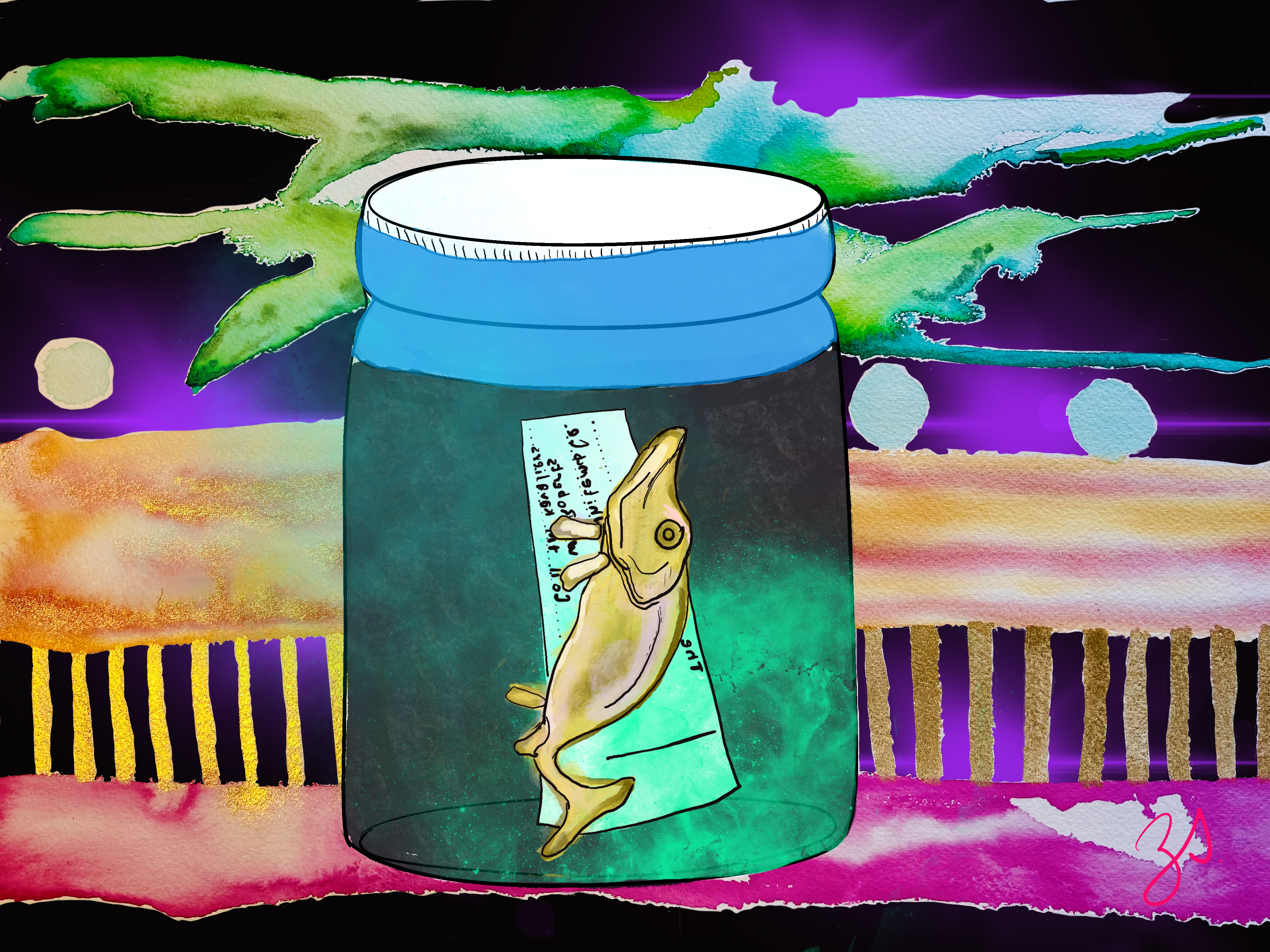
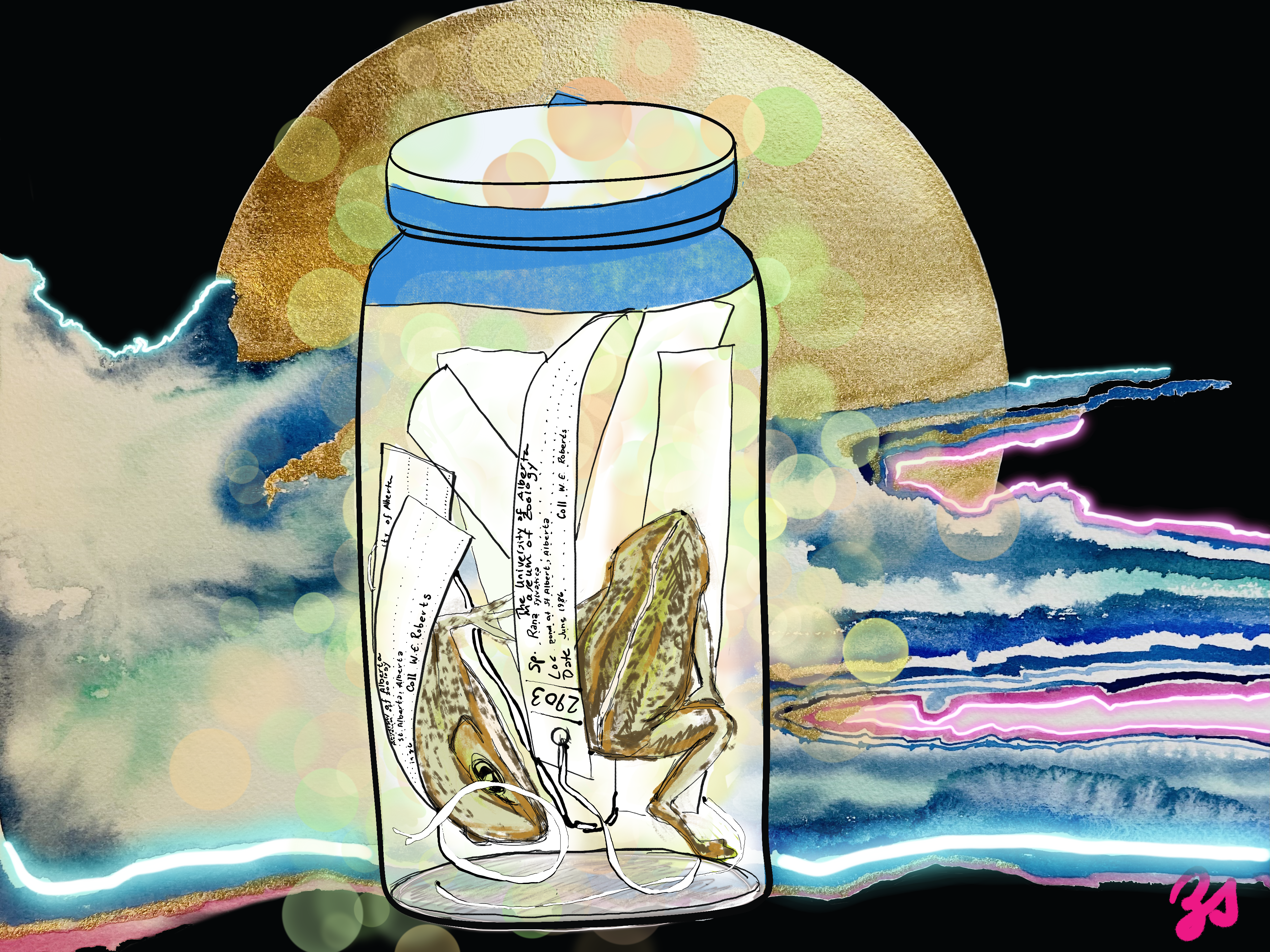
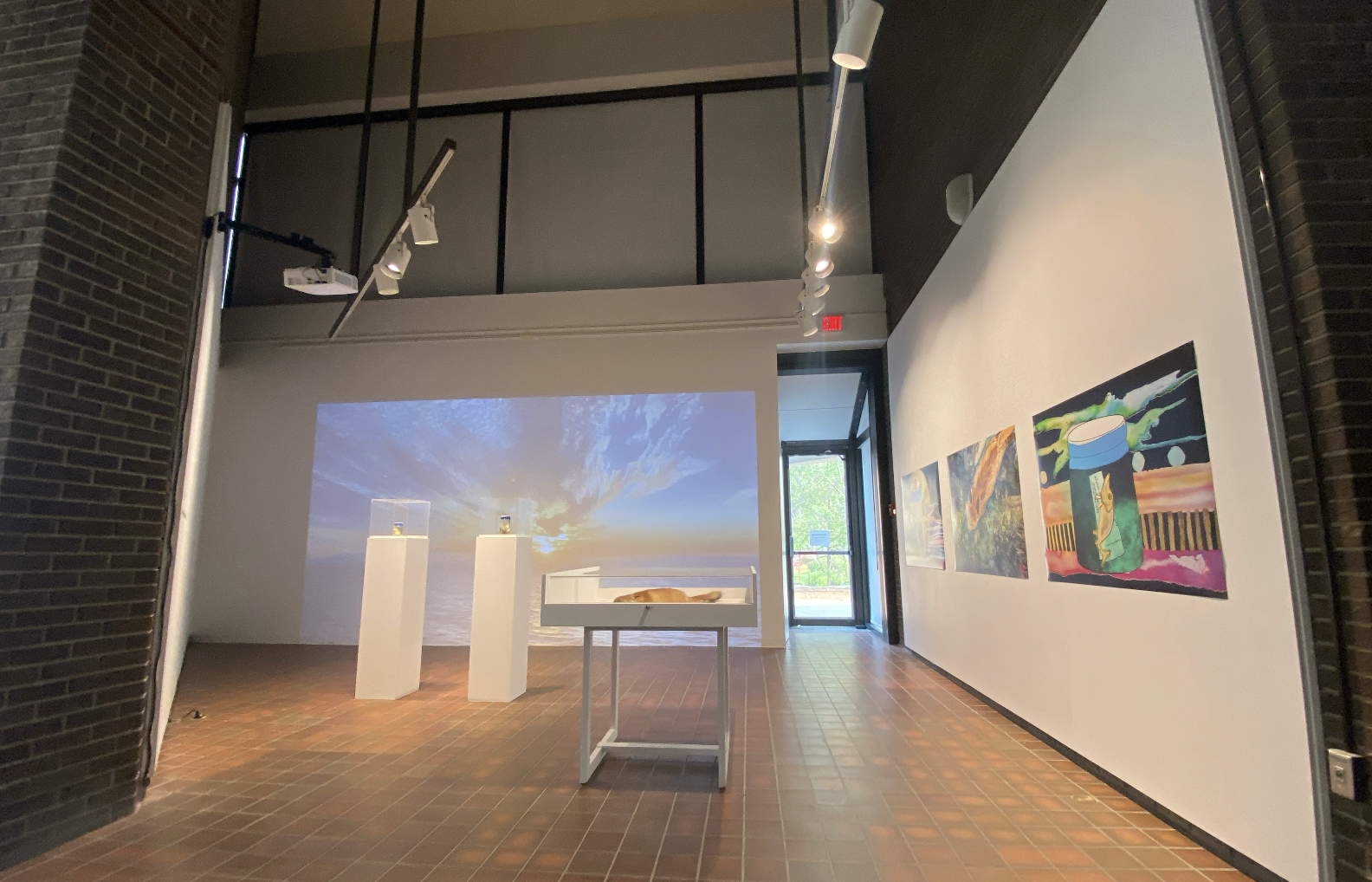
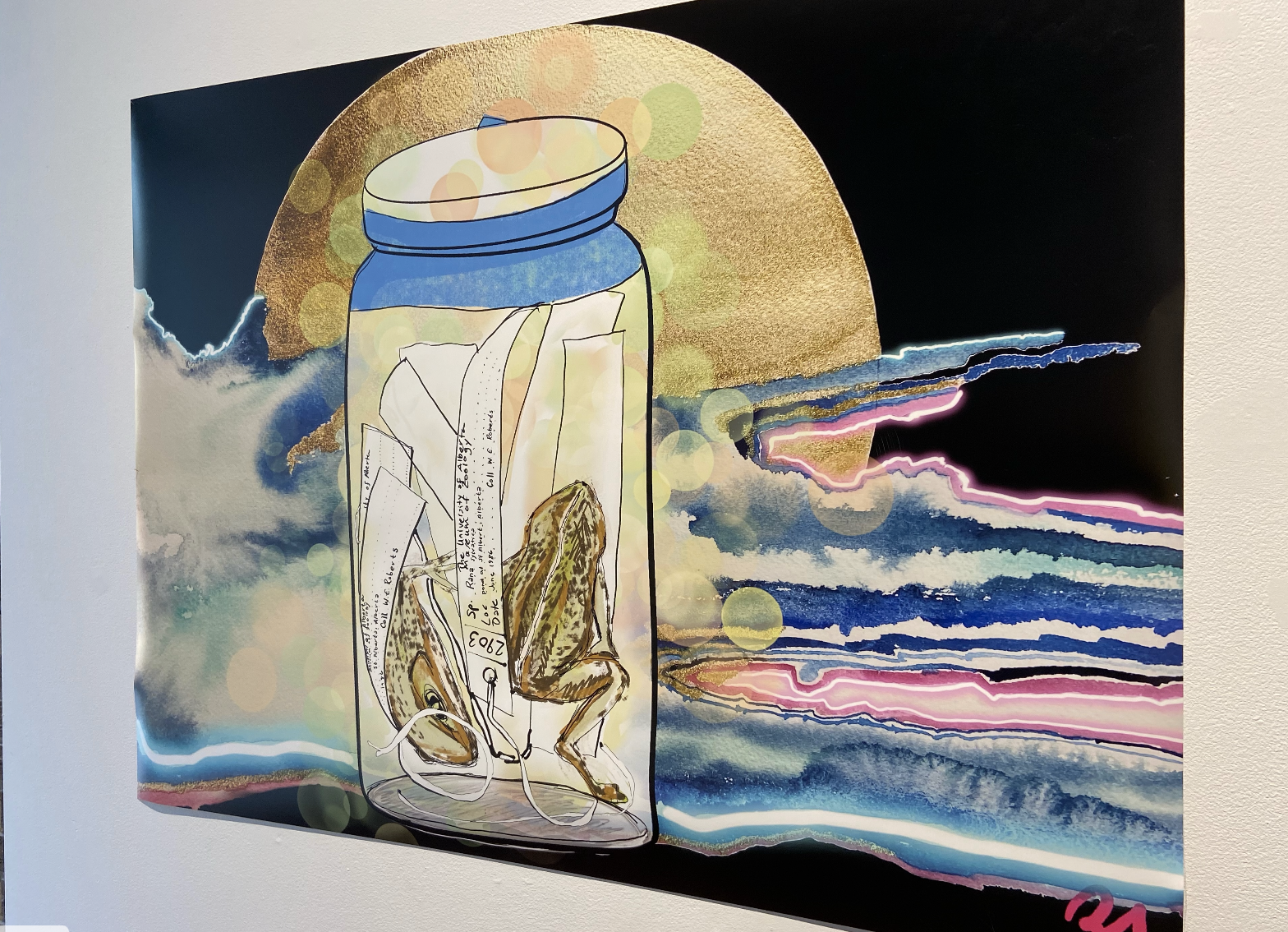
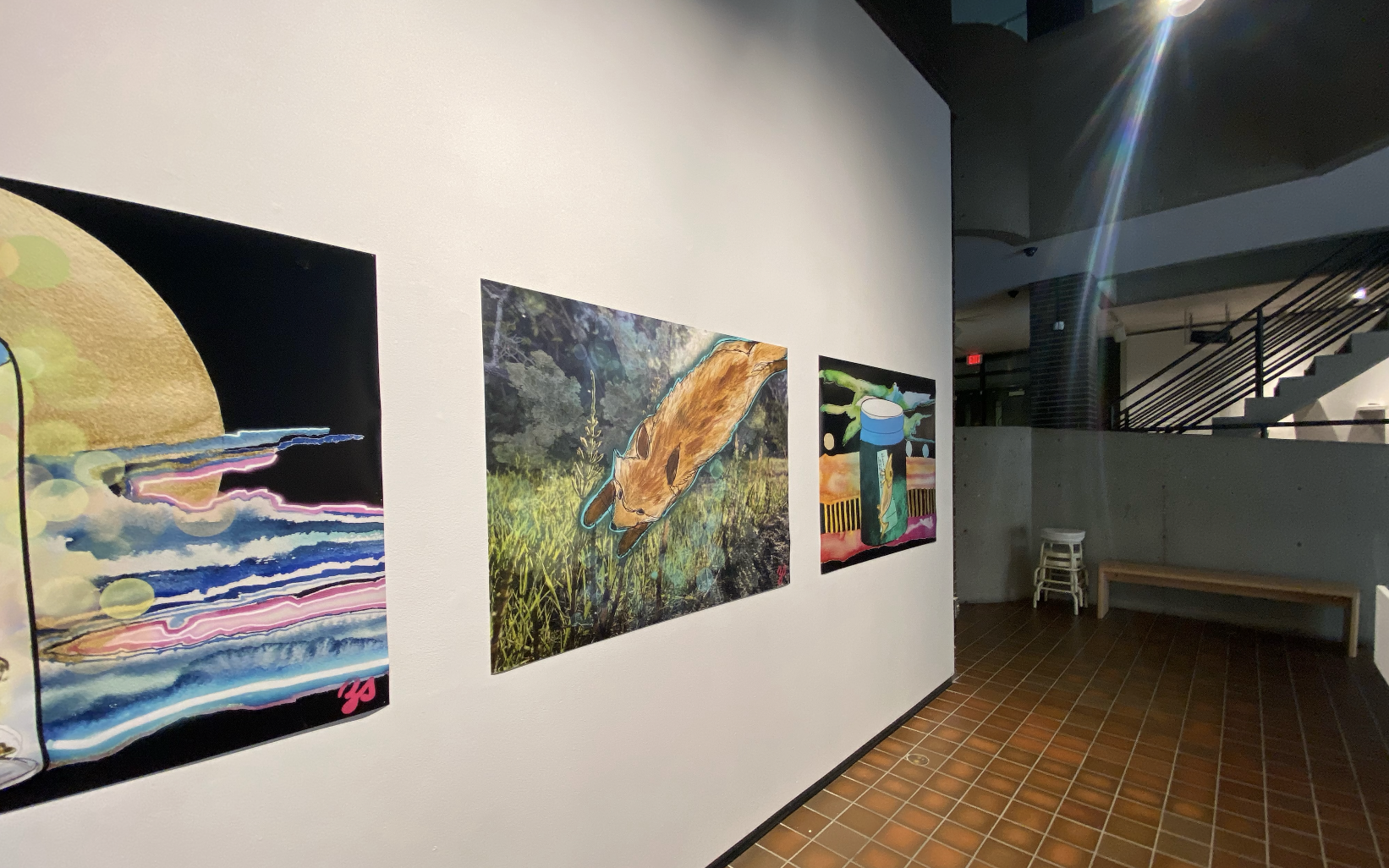
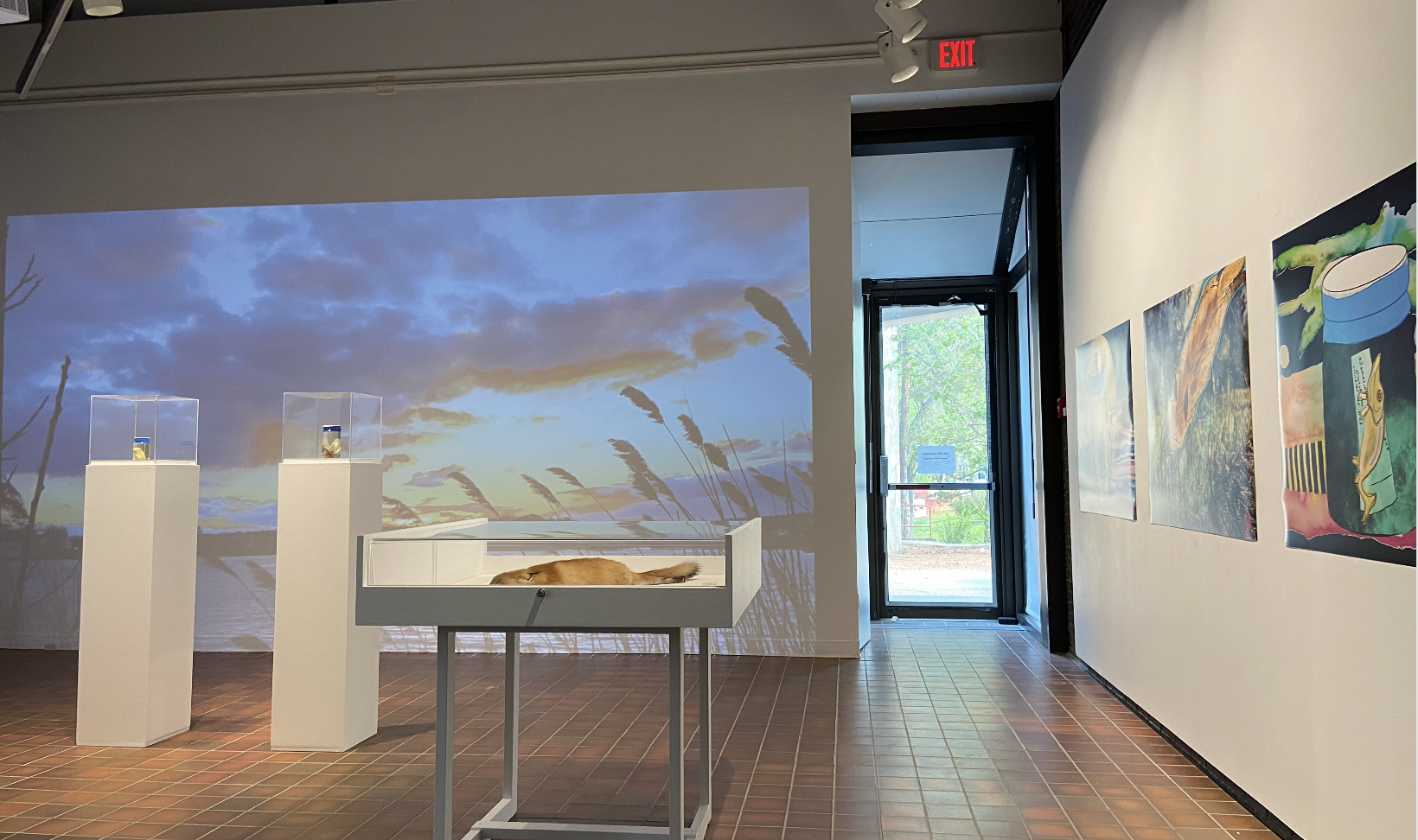
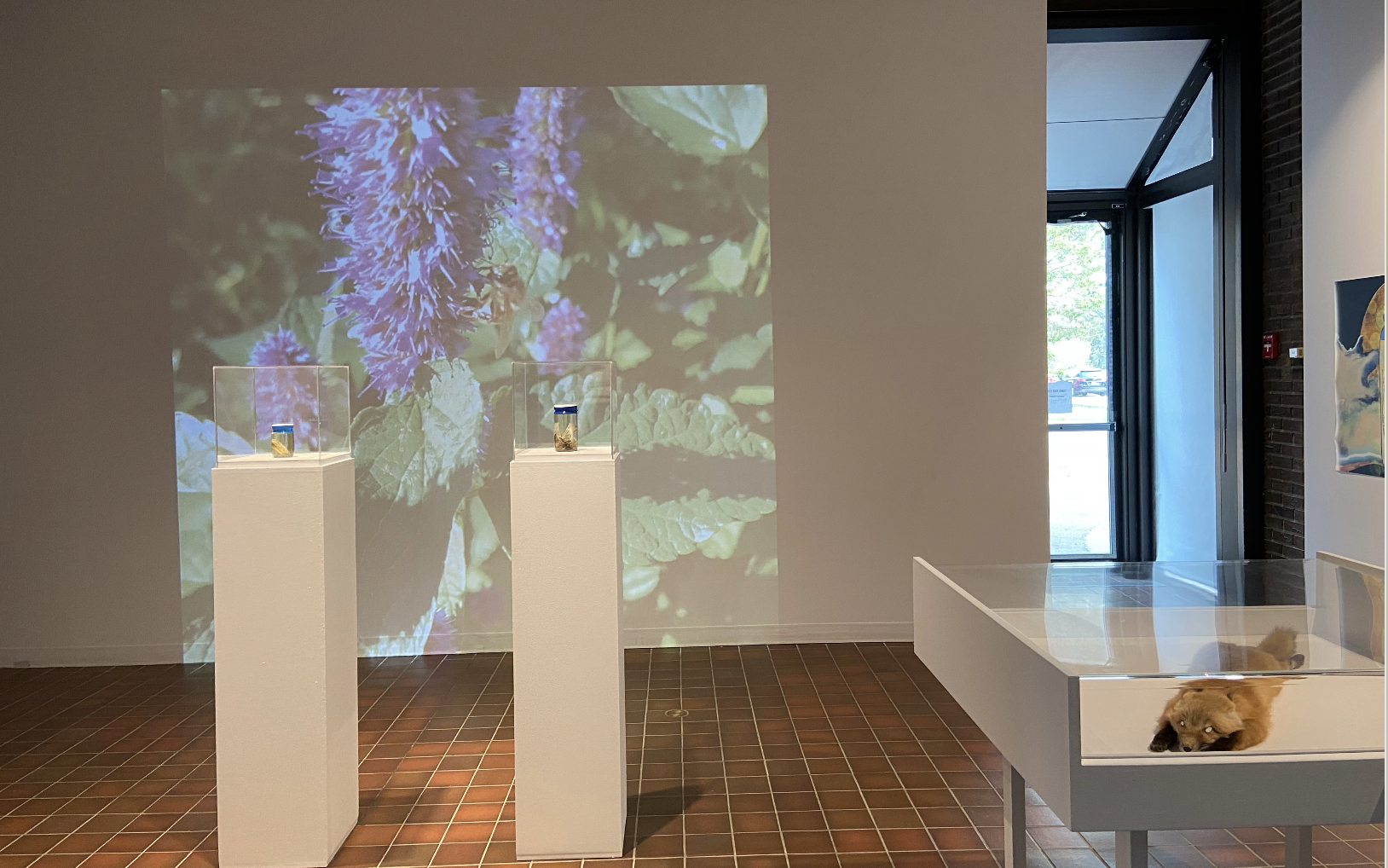
If I were so lucky to extend this body of work further, I wanted to carefully and respectfully create work that tended to other critters collected from homelands my Métis and (further back, Cree) ancestors are connected to. So, as I began to envision what a project like that could entail, I began to explore the holdings of museums in New York. I thought that, hopefully, I might find some interesting critters from the prairies living in boxes and drawers in the U S of A.
The first institution that came to mind was the American Museum of Natural History. I doubted that they would have anything from Alberta, Saskatchewan, or Manitoba. But it was worth a try. So, I set about familiarizing myself with the museum’s holdings. It was not as easy to look up critters and their provenance on AMNH’s site as it is at the University of Alberta (shout out to the folks who digitized uAlberta’s holdings and maintain these databases!). But I did eventually figure out how to search the ichthyology database.
After some noodling, I typed in ‘Alberta’ in the ‘State’ search function. Twenty one hits popped up. As I opened each record, I saw what I expected: species mainly collected in the early 20th century (1910, 1914, 1915), from expected places like Banff National Park. I knew, from reading Stephen Jay Gould’s Wonderful Life, to expect materials in flagship museums in the USA collected by US scientists from the Rocky Mountains around that period. It was then that a curious thing happened. A little over halfway down the records, the specimens abruptly shift to collection dates from the 1970s, starting with a Mountain Whitefish (Prosopium williamsoni) collected from the Red Deer River in 1973. This was starting to get awfully close to Wayne’s spatial and temporal hauntings. But nothing could have prepared me for what happened when I clicked on Record 17 (Catalog Number I-55437).
There, staring back at me, was a Hiodon tergisus collected from: the “Medicine river (near mouth), ca. 10 miles northwest innisfail”.
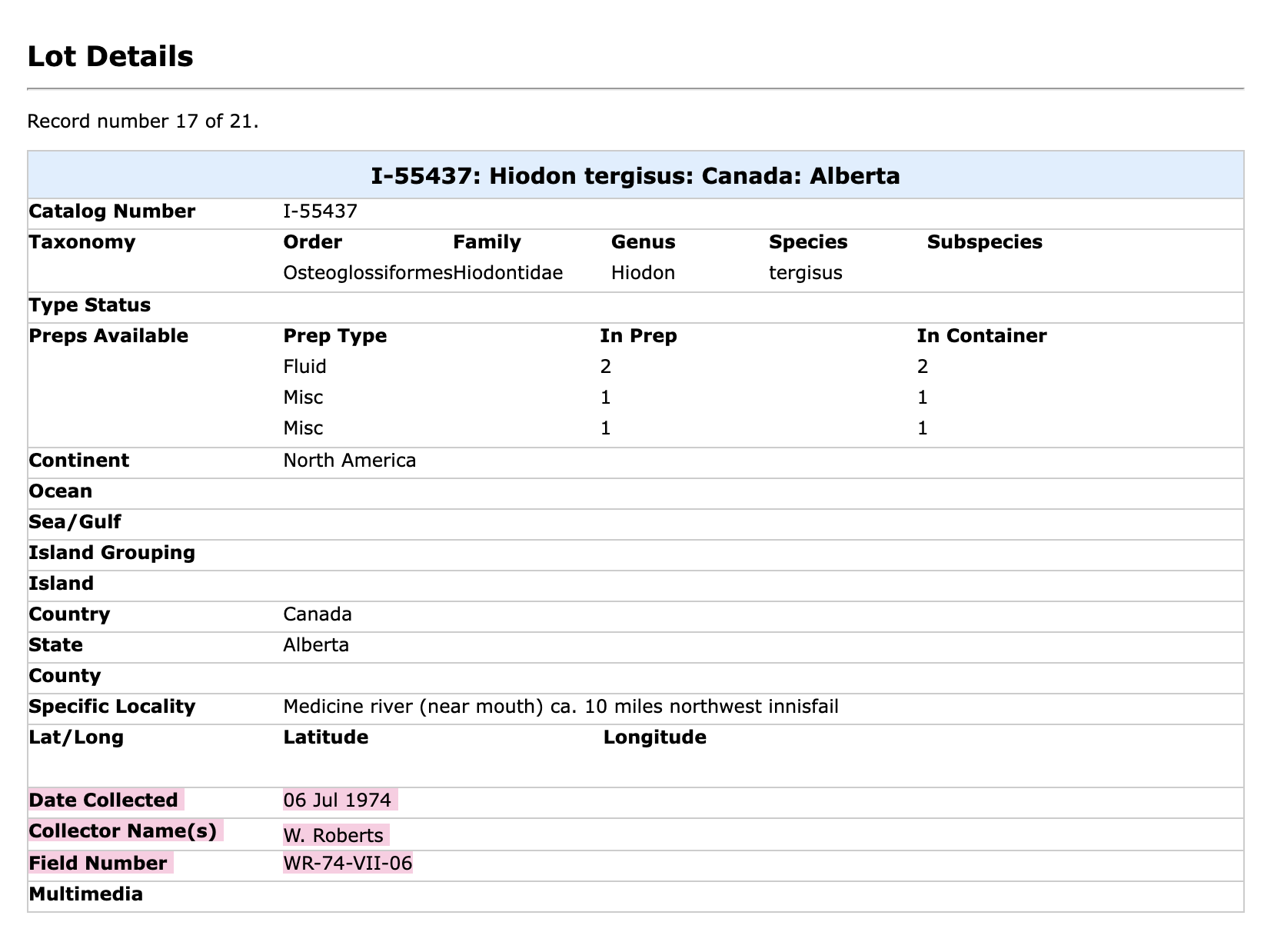
There, nearly 2500 miles away, sat a mooneye Wayne had collected in July 1974.
Something tugged at my memory. When Wayne had passed away, a librarian and archivist, Anna St Onge, had kindly compiled a dropbox with every publicly available article Wayne had authored during his career. I went over to look at the folder again. There, carefully documented was the following entry:
“Roberts, Wayne E. “First Record of the Mooneye (Hiodon Tergisus) in Alberta.” Journal of the Fisheries Research Board of Canada 31, no. 2 (February 1, 1974): 220–21. https://doi.org/10.1139/f74-037. (Open Access)”
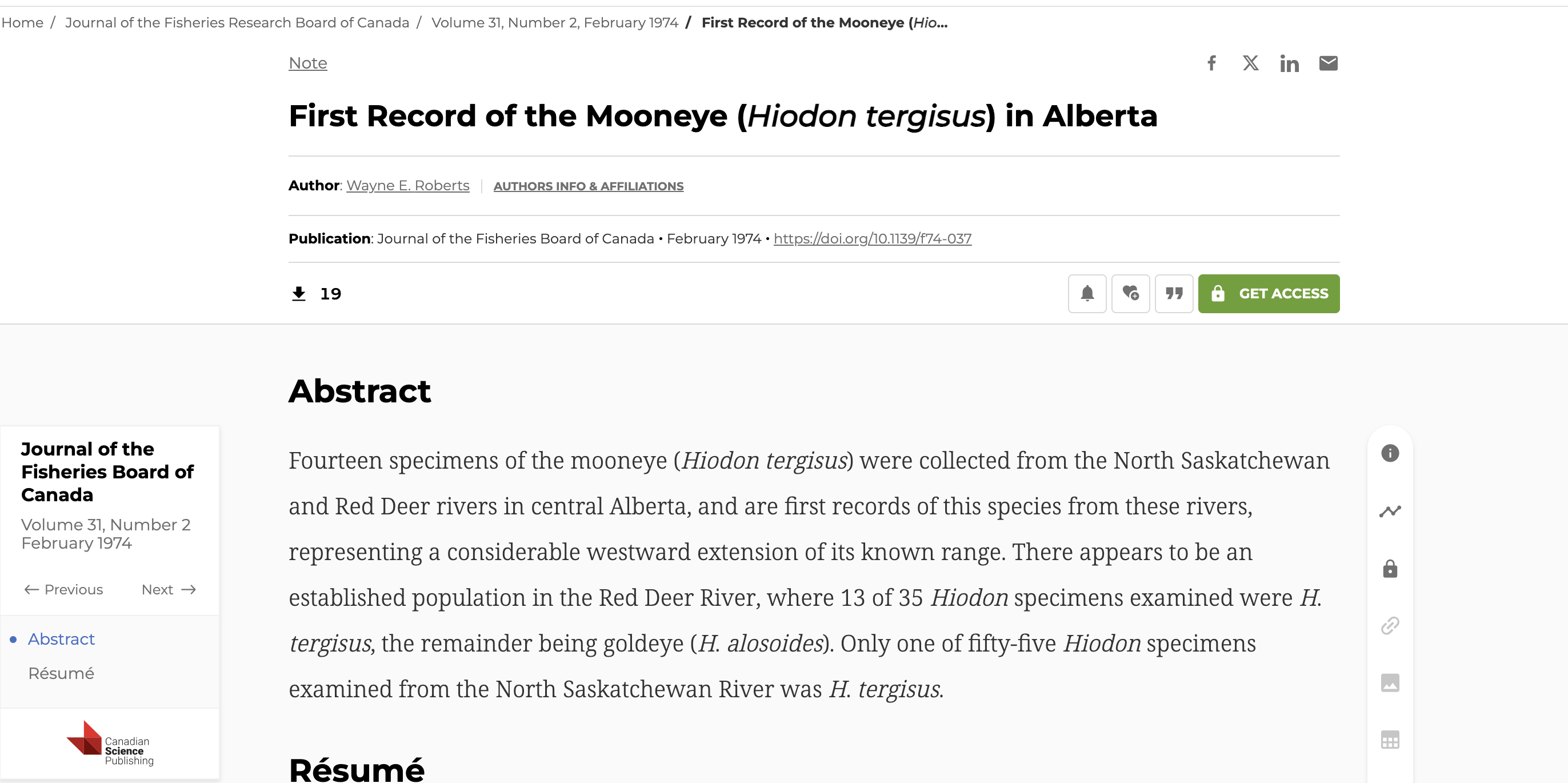
I sat, stunned, at my computer for quite a while after stumbling upon these records. Wayne had never bragged to us about an aspect of his work being recorded in the American Museum of Natural History. In fact, if anything, he didn’t brag, as a general rule, in the boastful language so typical of scientists I encountered throughout my career. He took this one with him to the beyond.
As I collected myself and set about formulating my plan for how to carefully, respectfully engage with specimens he had collected 50 years ago, I scrutinized the artist residency application more closely. The deadline was March 4. I gasped.
The deadline fell on the 6th annivesary of Wayne’s passing.
Once again, as has happened so many times since he passed, he had sent me a clue. And this time, I need to make sure I honour it.
I didn’t get the residency. I am not sad about missing out on such an opportunity. I will be forever grateful for how this led me to the fortuitous realization that not only did a Métis scientist contribute significant fisheries research to one of the world’s leading museums fifty years ago, I now have a renewed drive to tend to the ways that prairie freshwater fish move and operate in the world in ways far more mysterious and magical than I could fathom.
So, even though I will have to cut close to 5000 words of my article and completely re-orient the arguments, I know the right thing to do is to follow the ringing of the bell.
kinanaskomitin, Wayne. I am heeding your message.
post script: well, would you look at that. The pain has subsided. That story did need to come out.
 Critical Indigenous Fish Philosophy
Leave a comment